Invisible microbubbles forming on everyday plastics can peel off microscopic fragments, revealing a low-energy and widespread pathway for plastic pollution that operates wherever water meets plastic.
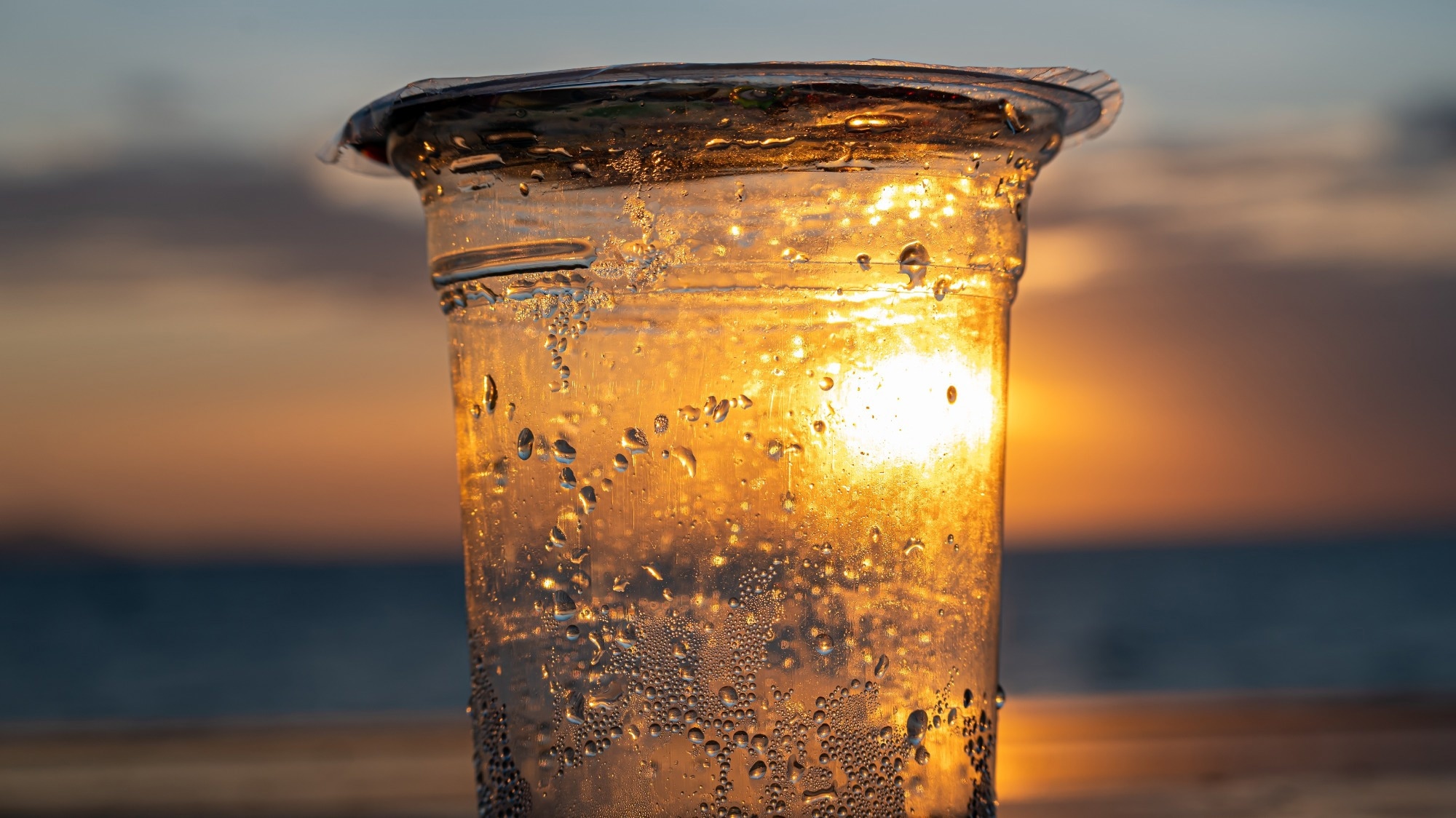 Study: Microbubble-induced erosion releases micro- and nanoplastics into water. Image credit: Ennachii/Shutterstock.com
A new study, led by researchers from Trinity College Dublin, Ireland, reports that air bubbles formed on plastic surfaces can cause surface erosion and fragmentation, and trigger the release of previously surface-bound and difficult-to-detect micro- and nanoplastics into the water. The study is published in the journal Science Advances.
Why understanding hidden sources of microplastics matters
Micro and nanoplastics (MNPs) are prevalent micropollutants in aquatic systems that have detrimental effects on the environment, wildlife, and human health. These pollutants can be detected at each level of the food chain and even in different organs of the human body. Recent estimates indicate that people ingest up to 90,000 microplastics annually from bottled water alone.
MNPs are characterized by their small particle size, strong adhesion properties, and marked ability to accumulate in human tissues. Accumulation of microplastics in human tissues has been associated with an increased risk of severe cardiovascular complications and has been correlated with neurodegenerative disease.
Existing evidence indicates that MNPs are released from bulk plastics into water through mechanical breakdown or ultraviolet (UV) exposure. However, studies investigating the influence of aquatic factors such as air bubbles, pH, and salt levels on MNP generation are largely unavailable, despite the intimate contact between plastics and water in aquatic environments.
Given the potential health impacts of MNPs, it is vital to understand the mechanisms underlying MNP generation and release to develop effective mitigation strategies. Among various mechanisms of MNP generation, the role of air bubbles has gained significant attention.
Air bubbles, which are predominantly formed on plastic surfaces under suitable water and surface conditions, can dislodge loose particles from these surfaces and carry them into the aquatic environment. Small bubbles attached to MNPs can modify their physical properties, such as surface tension, density, and transport behavior.
Regarding the mode of action, existing evidence indicates that stress induced by air bubbles on plastic surfaces due to internal pressure can cause surface cracks. Considering this mode of action, the current study was designed to investigate the role of air bubbles in MNP generation on the surfaces of typical plastics.
Microbubbles erode plastic surfaces without external energy
The study found that tiny air bubbles that form spontaneously when water conditions allow on typical plastic surfaces can erode surface defects and trigger the release of MNPs. These events occurred independently and in parallel with bulk mechanical breakdown or the UV-induced oxidative degradation of plastic surfaces, rather than replacing those mechanisms.
Air bubble-induced fragmentation of plastic surfaces occurred across a wide temperature range (25°C to 95°C) and in various water types, including deionized, tap, river, and marine water, with faster and more extensive release observed at elevated temperatures.
Regarding mode of action, the study showed that the formation, expansion, and movement of air bubbles on plastic surfaces generate localized shear and capillary stresses capable of dislodging and deforming low-molecular-weight polymer material at surface defect sites, which are less mechanically stable than the bulk plastic, leading to the release of MNPs in the water.
This mechanism of MNP generation via air bubbles differs from other widely studied mechanisms. During UV-induced oxidative degradation, a sustained flux of high-energy photons is required to disrupt polymer bonds. This typically corresponds to months to years of sunlight or energy-intensive laboratory lamps.
Similarly, mechanical breakdown requires a continuous supply of external pressure from waves, sand, industrial grinding, or turbulent mixers to break down polymer structures.
Air bubbles, on the other hand, form without the need for additional mechanical agitation or radiant power once suitable conditions are met, requiring no external energy input beyond the interfacial forces already present. The surface tension of bubbles provides localized forces that peel low-molecular-weight, low-crystallinity material from defects, meaning that the energy that drives surface fragmentation comes directly from the interfacial free energy already present in the system.
These findings collectively indicate that air-bubble-induced fragmentation of plastic surfaces serves as a genuinely low-energy pathway for MNP release, operating wherever water and plastic surfaces come into contact, including everyday and natural aquatic settings.
The formation of air bubbles depends on two factors: water quality and the physicochemical properties of plastic surfaces. At high temperatures, the gas solubility in water reduces, facilitating the formation and growth of air bubbles on plastic surfaces. Similarly, higher dissolved oxygen levels and lower salinity provide additional dissolved gas for air bubble formation.
Furthermore, hydrophobic polymers, such as polypropylene and polyethylene, have inherent surface defects and are particularly suitable for air bubble formation due to enhanced gas entrapment.
These mechanisms suggest that air bubble-induced fragmentation of plastic surfaces and subsequent release of MNPs can be altered by tuning environmental parameters, such as water types, exposure temperature, dissolved oxygen, salinity, and UV exposure, and plastic properties, such as plastic types, surface defects, biofilm attachment, molecular weight, and degree of crystallinity.
The researchers believe that their findings will prompt further studies on the role of aquatic factors and the development of strategies to mitigate the release of plastic pollutants.
Download your PDF copy now!
 Brain recordings reveal why food cravings return despite tirzepatide