As warming accelerates glacier melt worldwide, researchers warn that ancient ice and modern pollution together may reshape how antibiotic resistance circulates through vulnerable freshwater systems.
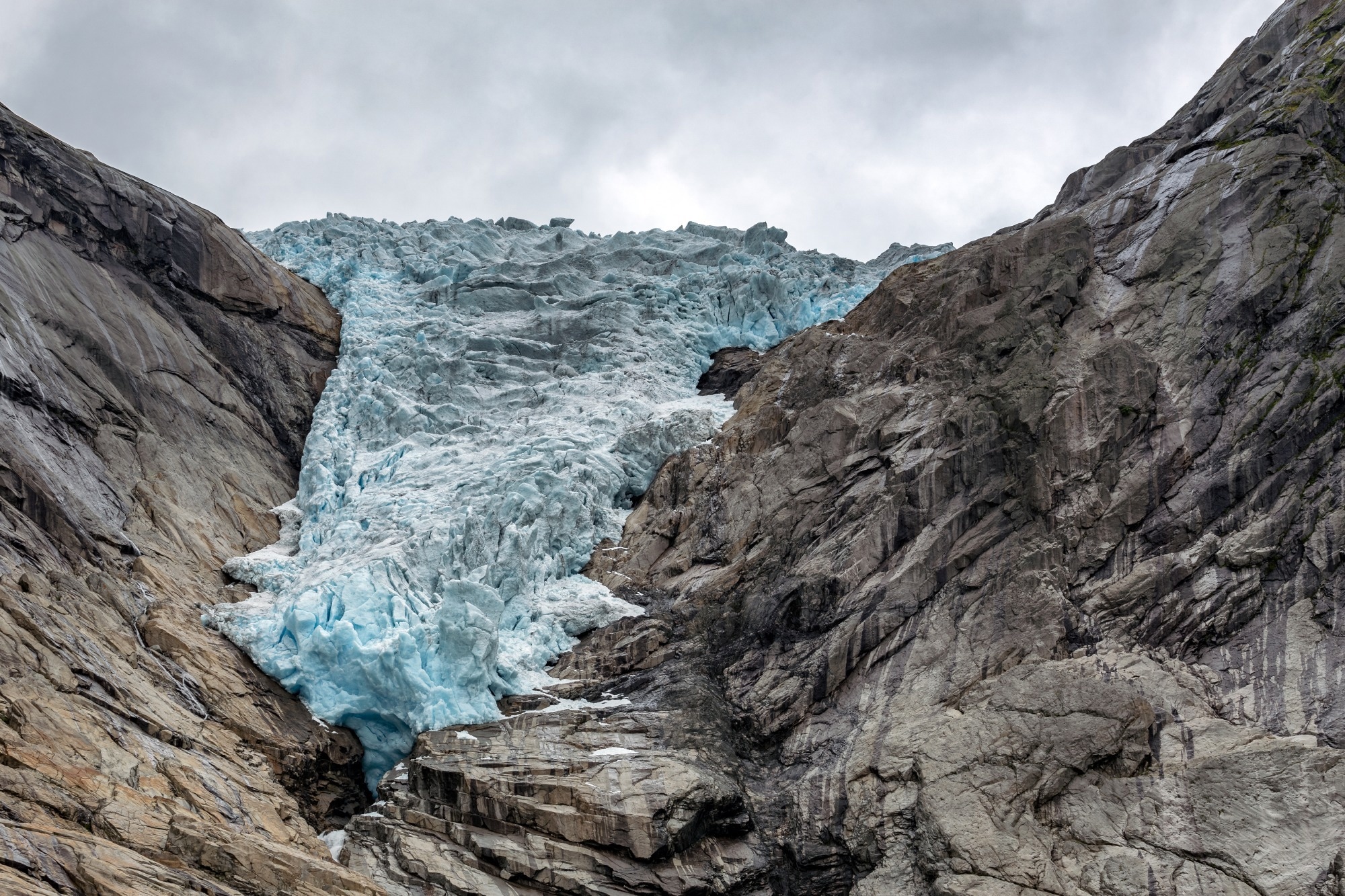
Study: Glaciers as reservoirs of antibiotic resistance genes: hidden risks to human and ecosystem health in a warming world. Image Credit: Eirik Sorstrommen / Shutterstock
In a recent review published in the journal Biocontaminant, researchers synthesized data from more than 1,000 studies to explore the emerging threat posed by antibiotic resistance genes (ARGs) trapped within global glaciers. Review findings highlight that glaciers act as reservoirs for both ancient resistance traits and modern pollution, proposing a conceptual “glacier continuum” framework to track their potential spread from high-altitude peaks to populated valleys.
These findings underscore potential risks to global freshwater ecosystems, highlighting the importance of developing integrated monitoring systems to detect and anticipate recent increases in reported ARG presence worldwide, rather than demonstrating widespread ecological or health impacts at present.
Antibiotic Resistance as a Global Environmental Threat
Antibiotic resistance, the phenomenon in which bacteria evolve resistance to commonly used antibiotics, is increasingly recognized as a critical public health crisis. Often associated with hospitals, livestock farming, and wastewater treatment plants, novel research suggests that the scope of antibiotic resistance may be expanding to previously unexpected regions.
Antibiotic resistance genes (ARGs) are now classified as biocontaminants because they persist in the environment, transfer between bacteria, and negatively impact human health.
While decades of research have linked human activities to the increasing prevalence of antibiotic resistance worldwide, the role of the cryosphere, specifically glaciers, in the environmental distribution of antibiotic resistance remains understudied. Emerging investigations reveal that glaciers are not sterile blocks of ice but complex ecosystems that have preserved microbial communities for thousands to millions of years.
Global warming is melting glaciers at rates far exceeding historical norms, destabilizing these long-standing genetic archives. This rapid change has raised two major concerns: the re-emergence of ancient microbes with intrinsic resistance and the mobilization and downstream release of modern resistance genes transported to glaciers via atmospheric pollution, with uncertain implications for downstream exposure.
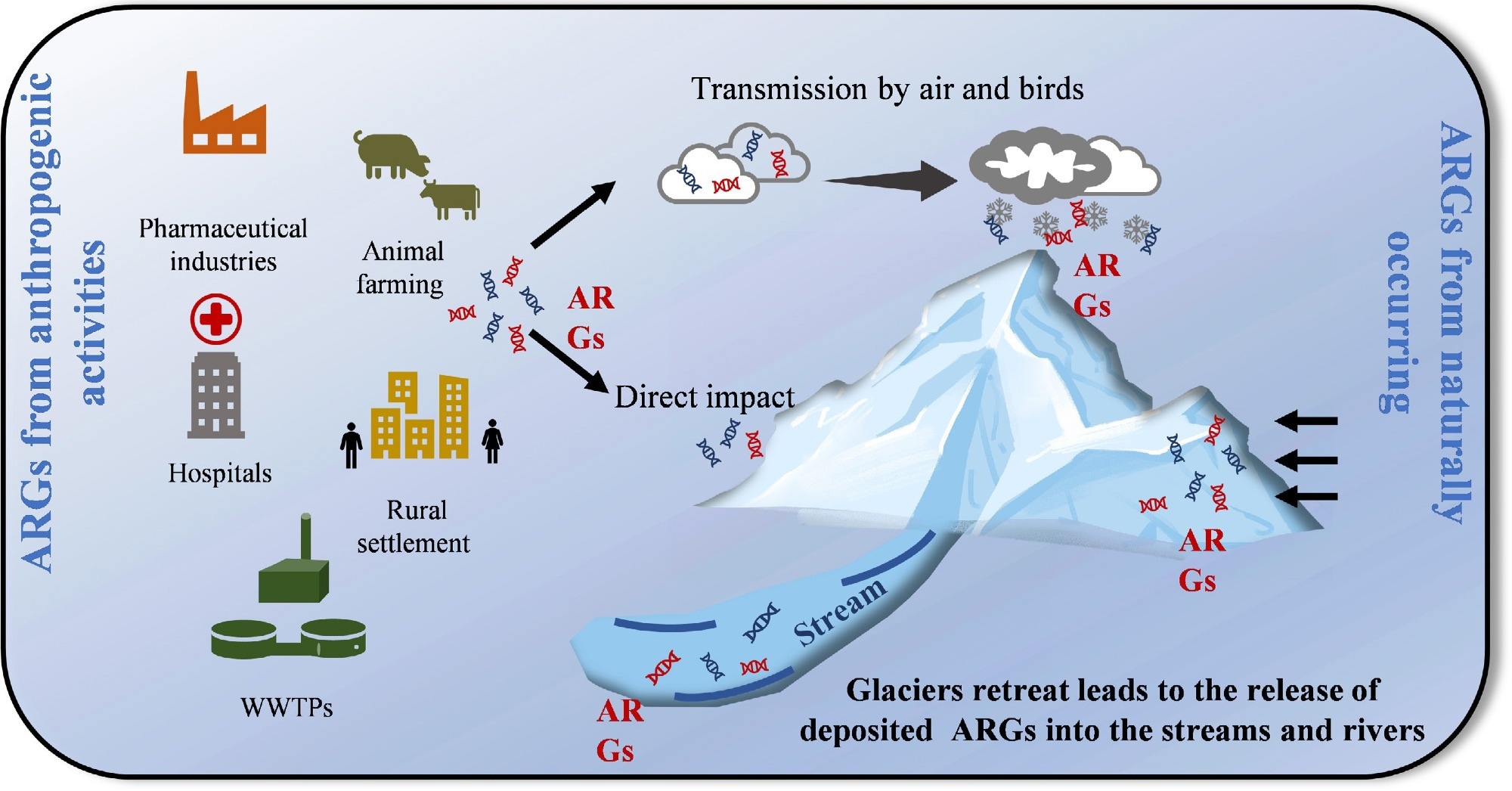
Sources of ARGs in glaciers: natural legacy and anthropogenic inputs.
Review Objectives and Analytical Approach
The present review addresses these concerns by conducting a systematic synthesis of the existing literature on ARGs in glacial environments. The study employed a bibliometric and meta-analytical approach using peer-reviewed publications screened from the Web of Science Core Collection covering records from 1980 to 2025.
The review initially identified approximately 1,600 documents related to glaciers, bacterial pathogens, and antibiotic resistance. Following title, abstract, and full-text screening, 1,248 distinct records were included in subsequent review and meta-analyses.
Statistical analyses categorized extracted findings based on geographic location, bacterial detection methods, and genetic mechanisms. Regions examined included the Arctic, Antarctica, and the Tibetan Plateau.
Traditional culture-dependent methods, such as the Kirby–Bauer disk diffusion test, were compared with advanced molecular approaches, including shotgun metagenomics.
This next-generation genomic approach enables simultaneous sequencing of all DNA in a glacial sample, providing a comprehensive view of the resistome, defined as the full collection of resistance genes present, without culturing bacteria. The review notes, however, that limitations remain in linking environmental detection directly to human health risk.
Global Patterns and Regional Differences in ARG Contamination
The review reveals an exponential increase in scientific attention to this topic. Research output between 1980 and 2010 was sparse, but publications over the last 15 years have surged, approximating a quadratic growth model and reaching over 370 expected papers by 2025.
Geographical meta-analyses revealed stark regional contrasts. In the Arctic, where millennia of human habitation and industrial development have occurred, ARG levels were one to two orders of magnitude higher than those in Antarctica.
In Canada’s High Arctic, for example, most coliform bacteria isolated from glacial ice were resistant to antibiotics such as cefazolin and cefamandole. The Tibetan Plateau similarly displayed high ARG abundance, attributed primarily to long-range atmospheric transport from neighboring regions with high antibiotic use.
Antarctica, by contrast, remains relatively pristine but not uncontaminated. Ancient ice cores revealed naturally occurring resistance genes predating clinical antibiotic use, while modern human activity near research stations has introduced resistance to synthetic antibiotics, although available evidence remains geographically limited.
Implications for Environmental Monitoring and Public Health
This systematic review establishes that glaciers function as environmental reservoirs and potential transport pathways for ARGs. It highlights the possible release and accumulation of resistance genes into downstream lakes and rivers as an emerging biosecurity concern, without yet quantifying population-level exposure or health risk.
The review further shows that many studies examine glacier habitats in isolation, overlooking how antibiotic resistance may disseminate across connected ecosystems. The authors propose a standardized monitoring framework using metagenomics to track pathogenic bacteria and resistance genes across the entire glacier continuum.
Integrating these environmental data into early-warning systems could enable earlier detection and risk assessment, supporting preventive mitigation strategies before ecological contamination translates into measurable human health impacts, an outcome not yet empirically demonstrated.
Journal reference:
- Ying, H., Zhang, Y., Hu, W., Wu, W., & Mao, G. (2025). Glaciers as reservoirs of antibiotic resistance genes: hidden risks to human and ecosystem health in a warming world. Biocontaminant, 1(1), 0–0. DOI: 10.48130/biocontam-0025-0022, https://www.maxapress.com/article/doi/10.48130/biocontam-0025-0022
 Viruses on plastic waste pose new antibiotic resistance risks